Downhole camera technologies provide clarity in turbid conditions and facilitate safer intervention decisions
Download PDFMature Fields

Lost slickline BHA during SBHP survey
Middle East

An operator in the Middle East encountered operational uncertainty after a routine static bottomhole pressure (SBHP) survey resulted in the loss of a slickline bottomhole assembly (BHA). The well had been sidetracked and completed as an openhole oil producer with 4.5 in. tubing. The lost BHA raised concern that slickline wire could be present alongside the fish, which increased the risk of subsequent intervention activities.
Previous slickline fishing runs failed to provide conclusive results. High well inclination limited tool conveyance and control in the horizontal section, while scale buildup restricted access beyond 6,000 ft. Debris and suspended solids reduced visibility and prevented confirmation of the fish position and wire status.
Without clear understanding of downhole conditions, the operator faced a critical decision. Proceeding with the fishing operations without wire confirmation risked additional complications, nonproductive time (NPT), and increased costs. Abandoning fishing efforts without adequate diagnostics could risk unnecessary equipment loss and future production issues. To support safe, informed decision-making, the operator required real-time visual confirmation of downhole conditions in a cloudy, debris-filled environment.
The intervention presented several challenges that limited the effectiveness of conventional slickline and fishing techniques. High well inclination reduced conveyance and tool control in the horizontal section, while scale accumulation along the tubing and liner restricted access and obstructed visibility at depth.
The well contained debris and suspended solids that reduced optical clarity, which rendered traditional camera systems ineffective without extensive circulation or inert gas conditioning. Most critically, the operator could not determine whether slickline wire was positioned alongside or entangled with the fish neck. Without this confirmation, any fishing attempt carried risk of additional complications, nonproductive time, and increased costs.
The operator required a diagnostic solution that could deliver clear, real-time visuals in turbid conditions with minimal circulation and without reliance on inert gas to support safer and more informed decision-making.
To reduce uncertainty and provide real-time confirmation of downhole conditions, Halliburton deployed a visual diagnostic solution that combined the SPECTRUM® 360 multi-side view camera with the SPECTRUM® IRIS down view camera on a real-time hybrid coiled tubing (RTHCT) platform. This configuration provided comprehensive visual coverage of the wellbore and fish, which allowed the team to evaluate conditions from multiple perspectives and identify potential intervention risks.
To improve visibility in debris-filled conditions, Halliburton modified the down-view camera shroud with a 45° angled jetting design that continuously cleaned the lens and reduced circulation requirements. The bottomhole assembly used forward circulation and a tailored fluid strategy to maintain optical clarity and adapt to changing downhole conditions throughout the operation.
The RTHCT platform conveyed the camera assembly to depth and transmitted high-resolution images in real time. The visuals identified scale buildup and sharp edges along the liner hanger that restricted coiled tubing entry and provided direct insight into wellbore conditions that conventional methods could not confirm. Most importantly, the down-view camera confirmed a wire-free fish neck, which allowed the operator to select a safe and efficient intervention strategy.
ft of scale build-up reduced visibility
Real-time images
NPT
Intervention mitigated
Clear, real-time downhole images eliminated uncertainty and supported confident operational decisions. The diagnostics confirmed that no slickline wire was present around the fish neck, which allowed the operator to proceed without additional fishing attempts and reduced operational risk.
The team subsequently moved the fish into open hole, resolved the obstruction, and minimized further wellbore interaction. The modified camera shroud maintained image clarity in cloudy, debris-filled conditions with minimal circulation and supported efficient diagnostics in a high-inclination well.
The diagnostic approach helped the operator reduce nonproductive time (NPT), mitigate intervention risk, and make informed decisions with confidence. The operation demonstrated how real-time visual diagnostics can support safer, more efficient intervention planning in complex well environments.

Halliburton provides integrated well interventions to increase production, extend asset life, and resolve integrity challenges.

Coiled tubing solutions offer the latest safety features and technologies to optimize operational efficiency and service reliability.

Real-time high-resolution down-view camera with full circulation capabilities.
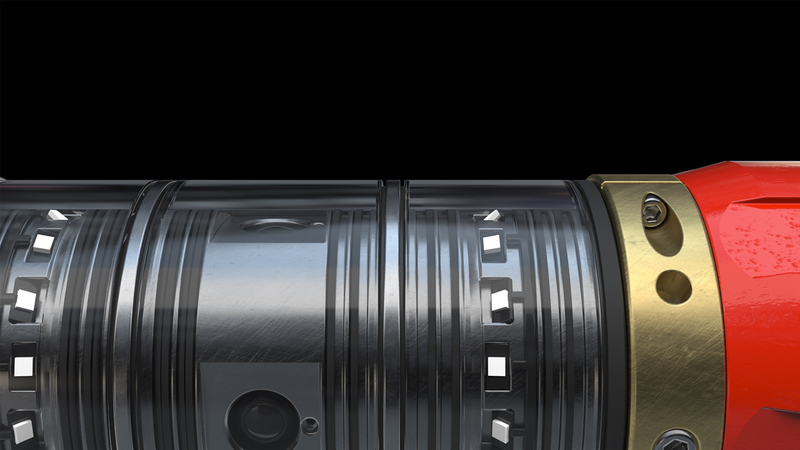
SPECTRUM 360 is the industry’s first flow through multi-side view camera, providing downhole visualization of well intervention services.