As production systems grow more complex and interconnected, operators face increasing pressure to make faster, more consistent decisions. Production performance improves when teams manage reservoirs, wells, networks, equipment, and safety systems as one connected asset. When teams integrate engineering models with operational data in context, they gain a clearer system-level view and support more consistent decision-making throughout production operations.
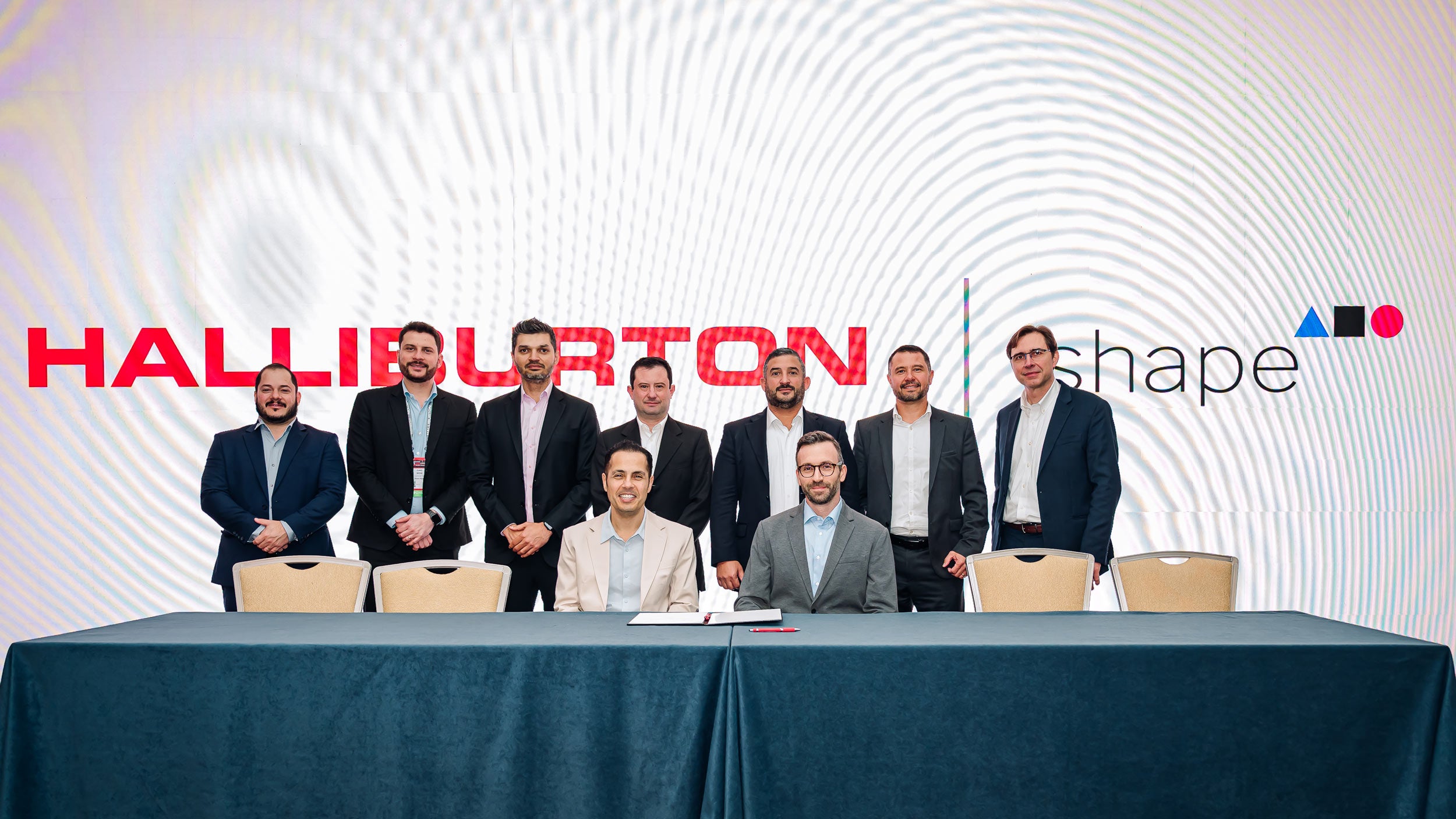
Halliburton and Shape Digital entered a strategic collaboration to advance digital asset performance management through a unified asset view that connects subsurface and surface intelligence. The collaboration extends trusted data, domain science, operational expertise, and applied AI to support predictive, asset-level decision-making over the full production lifecycle.
At the core of this collaboration is the ability to connect decisions throughout the production system. The integration of subsurface and surface intelligence helps our customers plan with confidence, adapt to change, and execute more consistently throughout the asset lifecycle.
“Together with Halliburton, we bring operational intelligence and applied AI into the context of real production systems,” said Felipe Baldissera, CEO of Shape Digital. “This collaboration supports better planning, more efficient operations, and stronger safety outcomes at scale.”
The collaboration combines Halliburton Landmark’s Digital Field Solver® (DFS) decision system with Shape Digital’s applied AI portfolio: Shape Lighthouse, Aura, and Reef. Landmark’s integrated reservoir, well, and production network models form the foundation, while Shape Digital extends the solution through expertise in equipment reliability, energy efficiency, and safety throughout surface operations. Together, the solution supports connected decision workflows.
Effective production planning depends on visibility into how reservoir behavior, well performance, facilities constraints, and equipment condition interact over time. When teams evaluate these elements together, production plans stay aligned as conditions change.
Through this collaboration, Landmark’s integrated reservoir, well, and network models receive continuous updates from surface intelligence related to equipment condition and reliability. Shape Digital applies AI to evaluate live and historical equipment behavior, while Landmark provides the system context to understand effects on flow, constraints, and production targets.
This connection helps teams identify constraints earlier, respond more quickly to variability, and maintain alignment as operating conditions change.
Energy efficiency depends on clear insight into how facilities operate within the broader production system. When teams evaluate process performance in isolation, they can limit the ability to balance efficiency initiatives with production objectives.
The collaboration connects detailed facilities data, which includes live and historical operating conditions, with Landmark’s production schedules and real-time production context. Shape Digital applies AI and engineering expertise to analyze facilities' performance and energy consumption, while Landmark provides insight into how operational adjustments interact with production plans and system constraints.
This perspective helps teams assess tradeoffs between energy efficiency and production objectives, while maintaining execution stability.
Safe and reliable operations require visibility into facilities' integrity, process safety, and well integrity. When teams consider these elements together, they can gain a clearer view of how subsurface conditions influence surface risk and how surface operations affect well integrity over time.
Through this collaboration, teams evaluate facilities and process safety insights alongside well integrity and subsurface conditions. Shape Digital applies intelligence focused on facilities' health and operational risk indicators, while Landmark provides the well integrity and subsurface context required to understand how risks can propagate throughout the asset.
This view supports earlier identification of integrity concerns and improves coordination between subsurface and surface teams during safety-critical decisions.
Within production planning, energy efficiency, and asset integrity, the collaboration reduces handoffs between disconnected workflows. Operations, maintenance, safety, and engineering teams work from a shared system view to allow faster alignment on priorities. This approach helps shorten the path from insight to action and supports clearer recommendations and more consistent execution in production operations.
The collaboration between Halliburton and Shape Digital reflects a broader industry shift toward decisions grounded in science, informed by intelligent automation, and validated through real-world operations. Through the connection of subsurface and surface intelligence, this approach helps operators manage complexity, maintain execution consistency, and maximize performance throughout the asset lifecycle.