Managed pressure drilling and continuous circulation systems allow for deeper sections and eliminate an additional liner in offshore Indonesia
Download PDFDeepwater

Increased risk of additional casing or liner requirements

Indonesia

As conventional hydrocarbon resources decline, operators increasingly target deepwater prospects with complex and unpredictable pressure regimes. These wells often present extremely narrow margins between pore pressure and fracture pressure, where even small deviations in bottomhole pressure can trigger influxes or lost circulation. In these conditions, conventional overbalanced drilling practices can restrict total depth, increase well control risk, and create additional casing and liner requirements that add cost and operational complexity.
This case study highlights how an operator offshore Indonesia successfully drilled a deepwater exploration well under tighter-than-expected pressure constraints. The application of managed pressure drilling (MPD), integrated with a continuous circulation system (CCS), allowed the operator to maintain precise bottomhole pressure control throughout drilling and connection events. This approach permitted the extension of two hole sections beyond their planned depths, elimination of one hole section and its associated liner, and delivered the well safely and efficiently.
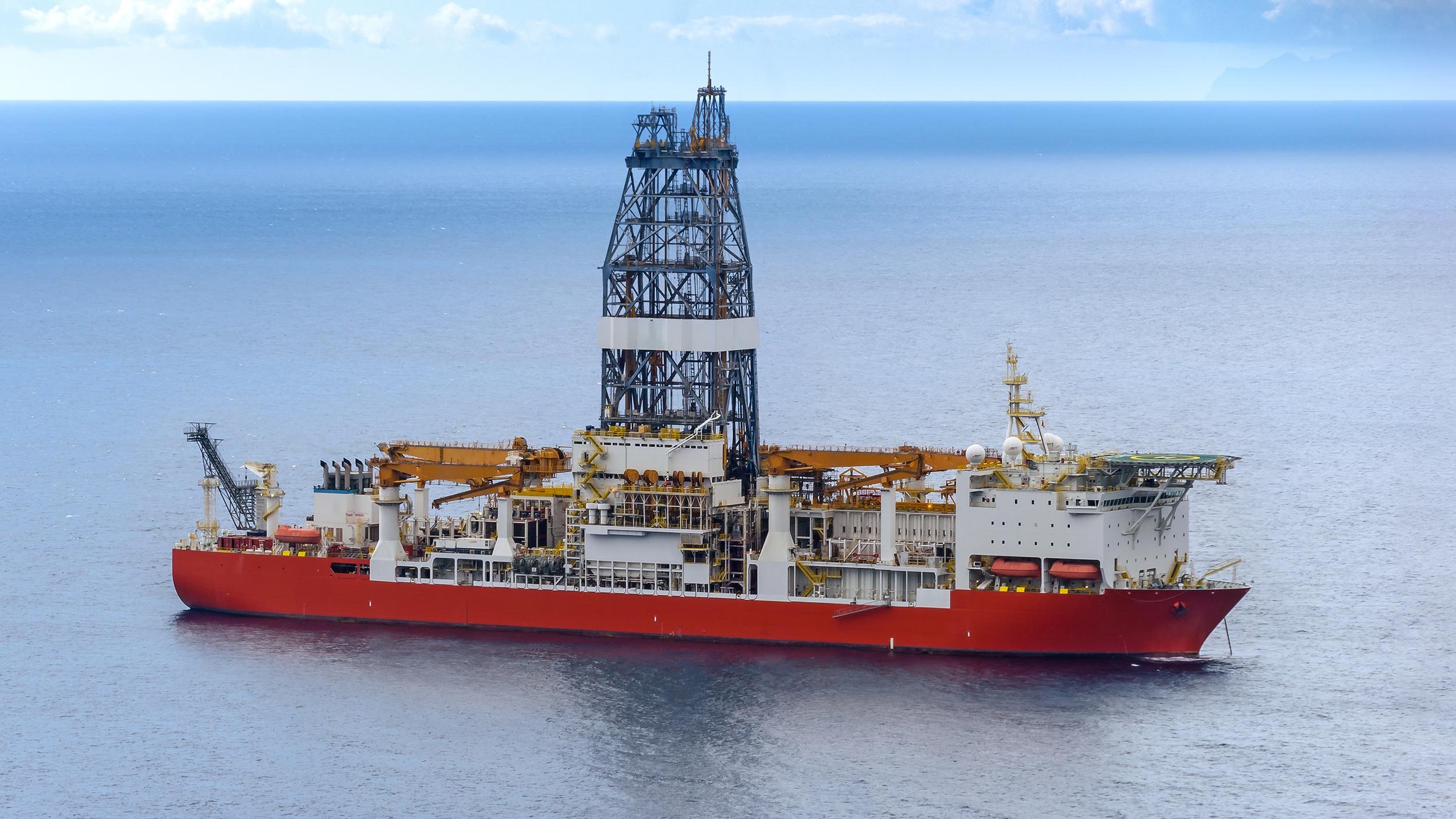
The well, drilled from a seventh generation drillship, encountered a highly constrained pressure environment characterized by elevated formation pressures and a narrow operating window. The initial drilling plan anticipated MPD deployment only in the final two hole sections, where the operator expected pressure challenges to intensify.
However, drilling the surface hole section indicated a more severe environment than forecasted. A leak off revealed significantly lower than predicted fracture pressure, which reduced the available drilling margin. Although the team could drill the surface section conventionally, subsequent operations exposed increased instability. At section TD, while circulating and conditioning the mud, an influx was induced. The decision was made to circulate the influx and increase the mud weight, which resulted in a mud loss scenario.
Further observations showed that pore pressure tracked the mid case prognosis, while fracture gradient trended below the low case scenario. This created a more severe drilling environment than planned and increased the risk of well control events, lost circulation, or the need for additional casing and liners.
In response, the team revised the drilling strategy to deploy MPD in all remaining hole sections. This approach allowed the operator to drill with a statically underbalanced mud weight and simultaneously maintain dynamically overbalanced equivalent circulating density (ECD), which effectively widened the operable window.
The MPD system facilitated precise bottomhole pressure control through adjustable surface back pressure. As drilling progressed and pore pressure increased, the team adjusted surface back pressure to maintain sufficient overbalance at the bit and assure that ECD at the casing shoe remained below fracture pressure. This dynamic balance allowed for deeper drilling of without a change to mud weight.
Circulating to trip mud in the narrow margin environment became a critical operation. The team planned and executed these activities using the MPD real time hydraulics model. Amid heavier mud displacement, the control system reduced surface back pressure in parallel with flow rate reduction, guided by accurately tuned hydraulics modeling. This sequence prevented unintended wellbore events and preserved well integrity. Dynamic pore pressure tests confirmed pore pressure prior to circulation to trip mud weight, which provided sufficient overbalance.
Integration with a continuous circulation system (CCS) further improved the MPD system. CCS maintained constant bottomhole pressure throughout connections, reduced pressure fluctuations, supported continuous cuttings transport, and lowered ECD at the casing shoe compared with conventional MPD connection practices. These benefits reduced the likelihood of loss events amid connections and supported longer rotating control device (RCD) run life.
Operational readiness also played a key role. The rig crew underwent comprehensive classroom and scenario-based training prior to execution, which improved familiarity with MPD and CCS systems and allowed for consistent, confident application of the technology throughout the campaign.
The integrated MPD and continuous circulation strategy allowed the operator to safely navigate a pressure regime that proved significantly more difficult than initially anticipated. Precise bottomhole pressure control prevented influxes and loss events, even in sections with extremely limited drilling margins.
The extension of section lengths amid execution permitted the operator to eliminate one planned hole section and its associated liner. This reduced well complexity and delivered measurable cost savings compared with the original well design.
The project demonstrated that the combination of statically underbalanced mud weights with dynamically controlled ECD in deepwater environments can unlock deeper drilling potential in narrow-margin environments. It also reinforced the value of accurate hydraulics modeling, disciplined execution, and cross functional collaboration in the delivery of successful outcomes in high-risk deepwater operations.
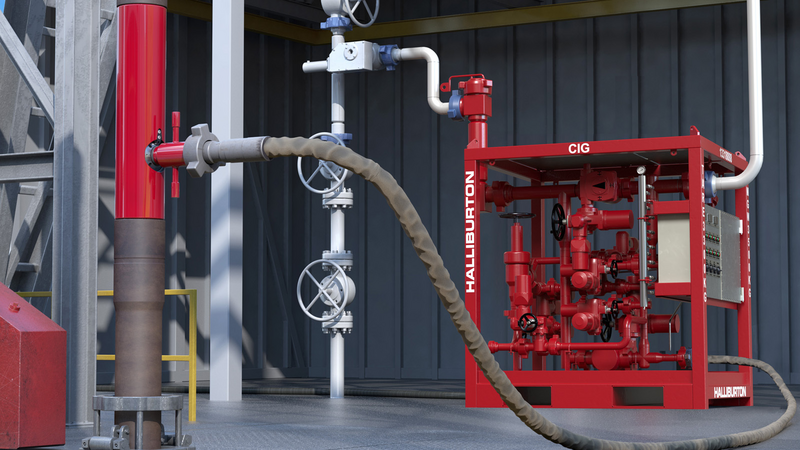
The Halliburton e-cd™ circulating device is an Eni-patented system used in managed pressure drilling operations
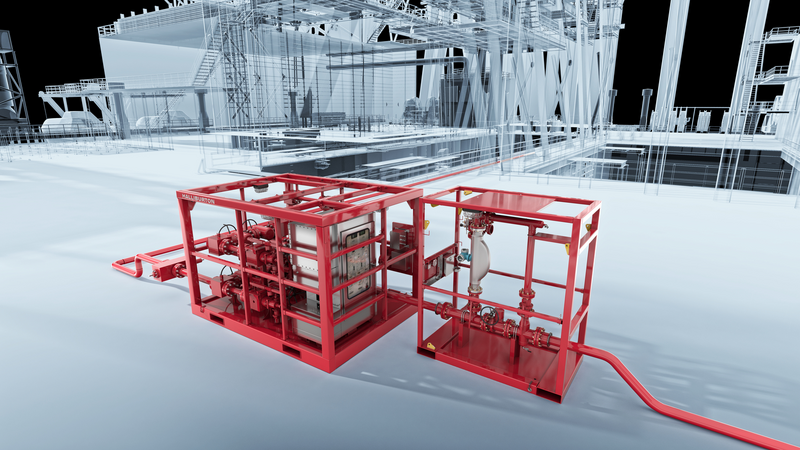
Navigate challenging pressure windows between pore and fracture pressure in complex wells to reduce drilling days and NPT.