
Automated flow control and integrated solids management supports safe well testing and saves an estimated 48 hours of rig time
Download PDFWell cleanup
Abrasive solids complicated flow control and safe, continuous well cleanup

Offshore Brazil

Petrobras sought an optimized reservoir cleanup solution that could increase flow rate, manage the produced solids, and maintainsafe operating conditions.
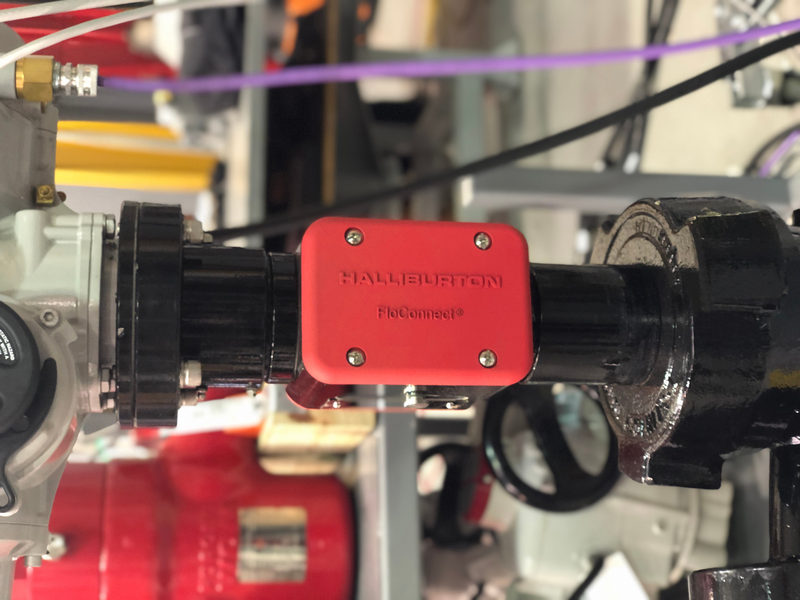
Halliburton deployed an integrated surface well testing solution that combined the FloConnect® Choke Manifold, part of the FloConnect® surface automation platform, with a dedicated solids-management package. The design placed the automated choke manifold downstream of solids-removal equipment and upstream of the heating and separation systems. This configuration allowed Petrobras to maintain stable operating conditions at higher flow rates, improve operational visibility, and accelerate cleanup activities, while protecting personnel and equipment.
Petrobras had previously conducted production flow operations with surface well testing equipment installed on a drilling rig, where high gas flow rates carried significant volumes of abrasive solids and oil-based mud. These harsh conditions exposed flow-control equipment to severe erosion, which could damage chokes, require equipment repairs, restrict flow rates, and interrupt production. Such disruptions could extend cleanup execution time and increase overall well costs.
Surface solids management posed an additional challenge. Limited rig deck space restricted solids-storage capacity, while hydrocarbon-contaminated solids required specialized waste-management procedures. Historical operations had stopped for up to 33 hr while crews offloaded solids from the surface well testing system. Petrobras required an approach that could manage solids without such interruptions while maintaining precise flow control and operational visibility.
Halliburton designed an integrated cleanup system that combined automated flow control with upstream online solids management. The FloConnect® Choke Manifold served as the primary flow-control system, while a desander and sand filtration package removed abrasive solids before fluids reached the manifold and downstream processing equipment. This configuration protected downstream equipment from erosion and maintained target pressure and flow conditions throughout the operation.
The all-electric FloConnect Choke Manifold provided automated flow control and real-time operation monitoring. Halliburton monitored well conditions from the command center and adjusted choke openings or changing flow paths within seconds. Remote operations reduced personnel exposure to high-pressure flowback activities. The plug-and-play design required no additional rig-up time, and the vertical equipment configuration performed reliably in the erosive environment with no washout during the job.
Halliburton also integrated centralized solids inventory control with real-time tank monitoring. The system trackedskip-tank capacity and supported fluid transfers without interrupting cleanup operations. This approach helped Petrobras optimize limited deck space, simplify offshore logistics, and maintain continuous operations.
Estimated rig time saved
Reduction in cleanup execution time
HSE, SQ, and NPT events
Metric tons of CO₂ emissions reduced
Petrobras completed the cleanup campaign safely and ahead of schedule. The integrated system maintained stable operating conditions and supported continuous flowback with no unplanned shutdowns. Remote choke operation eliminated the need for personnel to access flow-control equipment during flowback, which reduced exposure to high-pressure operations. Real-time monitoring also helped Petrobras identify process restrictions, respond quickly to changes in well conditions, and maintain efficient cleanup performance.
The system allowed Petrobras to produce the well at up to 78% of full capacity under harsh-solids conditions. Compared with historical operations in the same reservoir, Petrobras reduced cleanup execution by 26%, or 15.5 hr. Online solids handling avoided an additional 33 hr associated with historical transfer delays, for an estimated combined savings of 48 hr of rig time.
The operation recorded zero health, safety, and environment (HSE), service quality (SQ), and nonproductive time (NPT) events. The shorter operating schedule also reduced CO2 emissions by 1,167 metric tons. Together, these results demonstrated that automated flow control and integrated solids management can help Petrobras reduce cleanup time, limit operational interruptions, and improve safety during high-solids flowback operations. testing tanks before finalizing clean-up, another reference 33 h were saved by online solids handling.
Control, measure, and analyze surface well testing through automated workflows.

Halliburton surface well testing (SWT) tools and solutions compile full and reliable data, enabling better reservoir evaluations and appraisals.