
Innovative combo combines real-time data acquisition, hydraulic modeling, and flow simulation into a single dynamic platform
Download PDFUltra-narrow pressure windows

Colombia

Colombian drilling operations face extreme challenges, including ultra-narrow pressure windows, carbonaceous formation instability, high stuck-pipe risk, and chronic circulation losses. These conditions often result in costly sidetracks and increased nonproductive time (NPT).
To overcome these obstacles, Halliburton collaborated with the customer to deploy a first-of-its-kind integrated solution that combines a continuous circulation system (CCS) with a real-time downhole digital twin. This dynamic platform merges real-time data acquisition, hydraulic modeling, and flow simulation to maintain continuous pressure control, minimize formation damage, and increase operational safety. The implementation of this CCS and digital twin integration sets a new benchmark for drilling in high-risk, geomechanically unstable environments.
The operator faced extreme drilling conditions in one of Latin America’s most geomechanically unstable regions. Historically, these types of wells have suffered from extended flat times, sidetracks, and significant authorization for expenditure (AFE) overruns. In this formation, the operator encountered pressure windows that often fell below 0.5 ppg, reactive carbonaceous shales that could collapse wells, the risk of stuck pipe during connections, frequent circulation losses, and sidetracks that consumed up to 15% of the AFE.
The execution of a complex well under tight performance expectations with continuous circulation, minimized downhole pressure fluctuations, and real-time operational awareness would prove difficult. Additionally, standard static circulation methods could not provide the continuous pressure support needed in this geomechanical context.
To address this situation, Halliburton deployed the first ever global implementation of a solution that integrated a continuous circulation system, a digital twin, a data acquisition system (DAS), real-time hydraulic modeling, and flow trajectory simulations. The real-time downhole digital twin serves as a virtual replica of the well that updates with actual drilling parameters and allows for predictive modeling, fluid behavior visualization, and improved risk forecasting. Halliburton’s deployment of the CCS, improved by the digital twin, facilitated active wellbore pressure control and data-informed decisions.
The CCS and digital twin merger consist of a continuous circulation system, a downhole digital twin, a DAS, real-time hydraulic modeling, and flow-trajectory simulations. The key components included continuous circulation through these CCS tools to eliminate static conditions during connections and tripping; real-time equivalent circulating density (ECD) tracking with corrections from live pressure-while-drilling (PWD) readings; live hydraulic simulations to predict downhole behavior during density changes and pill displacements; DAS integration via WITS for uninterrupted monitoring of flow, pressure, and torque/drag trends; and proactive operational alerts and rapid-response modeling from the CCS cabin.
Operational hours on CCS tools without failure
The operator achieved measurable performance improvements with this integrated approach, including significant NPT reduction, particularly in high-risk connection intervals; minimized pipe-sticking and loss incidents, which reduced sidetrack risks; better drilling within pressure margins and improved well integrity; faster connections and trip times, with fewer flat time events; and higher confidence in wellbore stability and improvement to the operator’s health, safety, and environmental (HSE) profile.
The over 500 operational hours on CCS tools without failure resulted in improved connection and tripping times to optimize rig efficiency and included engineering support with remote modeling to facilitate rapid adaptation to real-time data.
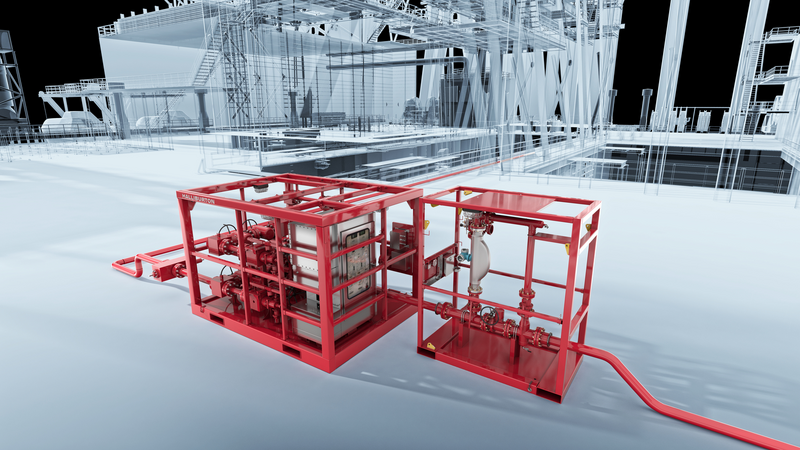
Navigate challenging pressure windows between pore and fracture pressure in complex wells to reduce drilling days and NPT.
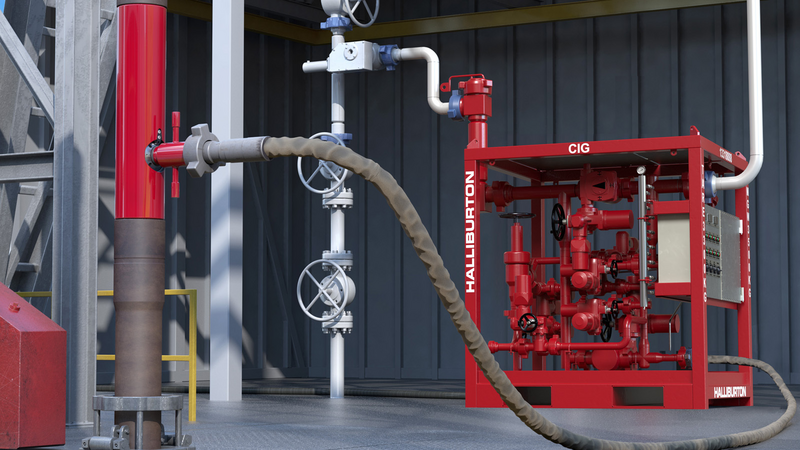
The Halliburton e-cd™ circulating device is an Eni-patented system used in managed pressure drilling operations