By Rami Yassine, President, Eastern Hemisphere
The unconventional revolution transformed the global energy landscape. Over the past two decades, operators unlocked vast hydrocarbon resources that once appeared uneconomic. They reshaped global supply, expanded reserves, and strengthened energy security.
Today, unconventional development enters a new phase. Operators must develop hydrocarbons at lower cost, respond to reservoir behavior as it changes, and generate stronger returns across entire asset portfolios. Automation helps operators adjust treatment execution in real time, rather than apply a uniform plan across formations that rarely behave uniformly.
As unconventional activity expands in regions such as Australia, the Middle East, and South America, operators require a way to adapt hundreds or thousands of wells to live reservoir response. Automation provides that capability. It helps teams evaluate treatment data, adjust execution, and maximize stimulation effectiveness for large development programs. The next chapter of the unconventional revolution will focus less on resource access and more on real-time asset optimization.
Conventional developments often center on a limited number of wells. Teams optimize each well and evaluate performance case by case.
Unconventional development requires a different approach. Operators must drill and complete hundreds or thousands of wells across rock that changes from stage to stage. A single high-performing well will not determine the success of a large development program. The ability to react to reservoir behavior in real time can.
That challenge places enormous pressure on drilling and completion teams. Rock quality, pressure, stress, natural fractures, and fluid behavior can shift across a single lateral. A fixed plan cannot account for every change, and a uniform stimulation design cannot guarantee uniform coverage.
Automation helps operators evaluate live data, recognize reservoir response, and adjust execution while the job continues. When operators adapt each stage to actual reservoir behavior, they improve stimulation effectiveness. When they place energy, fluid, and proppant where the reservoir needs them most, they strengthen development economics.
Many companies automate individual tasks, but few connect the entire workflow. Subsurface teams generate data that influences well placement, which affects drilling performance. In turn, drilling performance shapes completion effectiveness, which then influences production results. Each discipline builds on the previous one.
When operators connect these workflows through digital technologies, automation, and advanced analytics, they create faster feedback loops and make better decisions. That connectivity creates value. Teams can identify opportunities sooner, respond to changing conditions faster, and improve performance across the full asset lifecycle. Operators do not need more disconnected technologies but instead require technologies that work together.
The industry has begun to move beyond task automation. Leading operators now pursue closed-loop execution. These closed-loop systems analyze operational data, evaluate changing conditions, and adjust execution in real time.
Mother Nature does not deliver uniform reservoirs, so operators should not execute uniform stimulation and expect uniform coverage. Closed-loop frac automation evaluates live treatment data and adjusts the job in real time based on reservoir response. That capability helps operators place energy, fluid, and proppant where the reservoir needs them most to maximize stimulation effectiveness.
The unconventional business rewards effective response to reservoir variability, not uniform execution. Closed-loop automation gives operators a path to better stimulation quality, stronger recovery potential, and greater asset value.
The industry often focuses on technology, but customers focus on outcomes. They ask straightforward questions:
Those questions should guide every automation strategy.
Artificial intelligence, advanced analytics, and autonomous workflows create value only when they help customers achieve measurable business outcomes. Technology does not create value on its own. The results, however, create value. Operators that outperform their peers will use automation to improve execution, accelerate learning cycles, and strengthen asset performance.
Companies around the globe already demonstrate what automation can achieve. In Oman, an operator deployed LOGIX™ automation and remote operations throughout 36 wells and helped reduce well time by 21%. The deployment improved decision speed and strengthened drilling execution across the program. In Argentina, another operator is using OCTIV® digital fracturing services to optimize fracturing operations, giving personnel real-time control to adjust treatments and improve efficiency in the Vaca Muerta shale play. Looking ahead, we will deploy our ZEUS® electric fracturing services to the region to build on proven performance across major U.S. shale basins.
Meanwhile, operators in North America use automation technologies to improve operational decisions and execute large unconventional programs more efficiently. These examples highlight a simple truth: automation itself does not create value. Lower well costs, faster decisions, and better asset performance create value. Automation helps make these outcomes possible.
Automation does not replace engineering expertise but instead expands its influence on outcomes. The most successful unconventional programs bring subsurface specialists, drilling engineers, completion experts, operations leaders, and digital teams together early in the plan. Those teams align objectives, establish data standards, and build execution strategies that help crews respond to reservoir behavior in real time.
Technology can accelerate decisions, but it cannot replace sound engineering judgment. The organizations that combine automation with operational discipline, collaboration, and technical expertise will achieve the strongest results.
The unconventional revolution changed the industry's resource base. Now, automation will change its economics. As operators expand unconventional development around the world, they must lower costs, adapt to reservoir variability, and maximize capital efficiency.
The companies that succeed will not just drill more wells. They will use closed-loop automation to adjust in real time, improve stimulation effectiveness, and create stronger economics across every asset. For years, our industry has described automation as a technology journey. I believe that understates the issue. Automation is now an economic necessity.

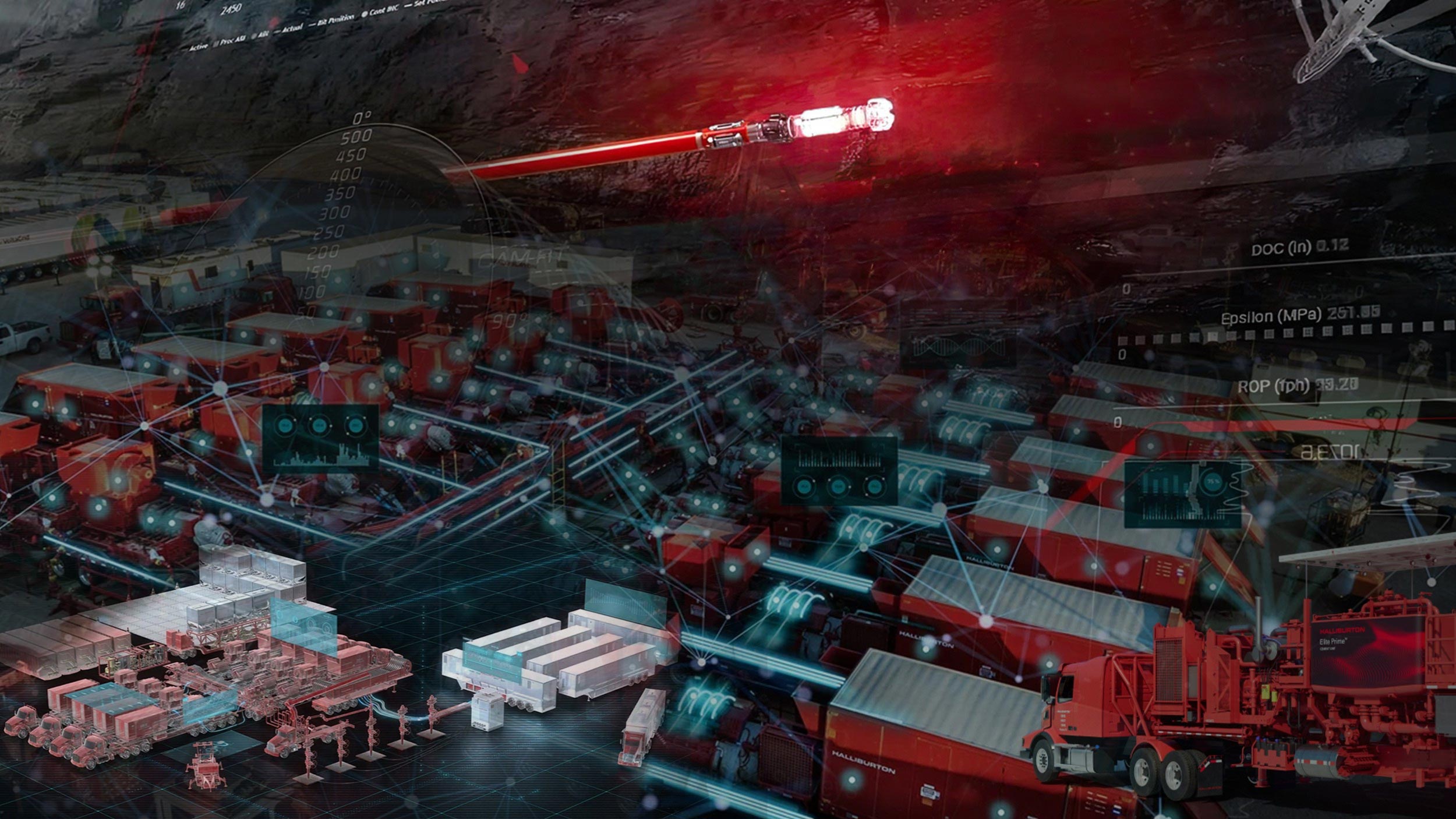
Increase the consistency and performance of well construction operations by integrating subsurface automation, digital twins, and remote operations
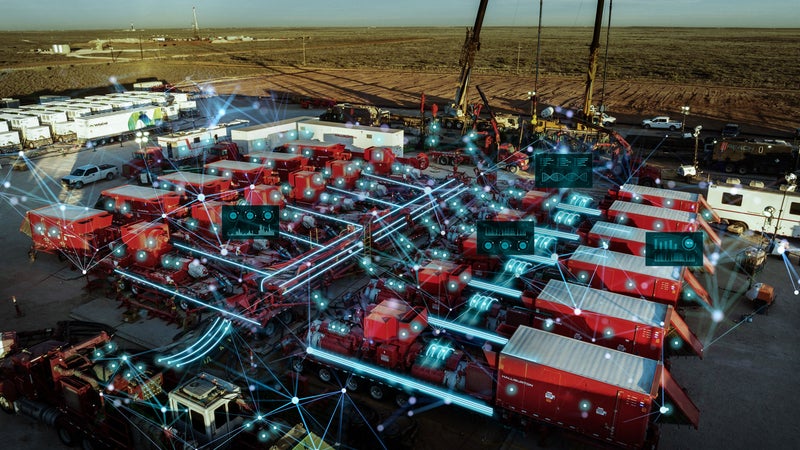
We are integrating insights, automation, and intelligence to improve the performance and efficiency of fracture operations.

Halliburton intelligent completions technology help accelerate production and improve decision-making to increase ultimate recovery and maximize asset value