Scaling offshore wind: PileCem™ grout powers next-generation anchoring solution
Download PDFOffshore wind

Scalable micropile anchoring solution for offshore wind foundations

Scotland
As global energy demand rises, both fossil and renewable sectors play pivotal roles to deliver a reliable supply. In the renewable space, offshore wind energy infrastructure rapidly scales—driven by advancements in turbine size and power output. However, with this evolution comes increased structural complexity and exposure to extreme marine conditions. The industry faces increased pressure to ensure anchoring systems can withstand enormous cyclic loads, variable seabed profiles, and deepwater pressures without compromise to reliability or cost-efficiency.
Micropiles have emerged as a critical technology in this context and offer compact, high-strength anchoring for land and offshore applications. Micropiles mimic the root system of a tree and the group response of multiple small-diameter piles acts as a highly efficient distributed anchor. This configuration spreads structural loads over a network of bonded elements, which improves stability and reduces the risk of single-point failure. Yet, a key challenge remains—how to secure each pile with a grout solution that delivers continued bond strength to subsurface rock and can withstand millions of tension-compression cycles over decades of operation.
At the forefront of this effort is the Subsea Micropiles robotic seabed drilling solution, which provides automation, precision, and repeatability to subsea pile installation. This innovative system helps deploy micropiles in difficult seabed conditions where traditional piling is not feasible to lay the foundation for high-integrity anchoring in the offshore wind sector.
Subsea Micropiles required a scalable micropile anchoring solution for offshore wind foundations that could withstand the extreme environmental conditions and complex structural demands of deepwater installations. In this specific case, 18-m-long, 273-mm diameter piles were installed into 325-mm boreholes at a water depth of 20 m. Each pile bonded at two critical zones: the subsurface rock and a surface-mounted loading sleeve. These piles faced operational loads that exceeded 10,000 kN composed of compression, tension, and bending moments over multiple planes and axes.
Conventional grouts lacked the resilience to cyclic loading and the adaptability for complex subsea conditions. Trial-and-error grout design is costly, slow, and prone to failure under long-term stress. Subsea Micropiles required a grout system tailored for high-pressure, cyclic hydro-thermal conditions and a method to validate its reliability before deployment.
Halliburton developed the PileCem™ grout system to address the grout challenge, which uses a finite element analysis (FEA) based digital twin methodology. This innovative approach allowed engineers to virtually simulate the entire lifecycle of the micropile and model formation integrity, grout placement, and operational loading conditions throughout its entire operational life. Upon each simulation stage, stress levels in the grout were calculated and compared to actual material strength parameters.
Where risk of failure was detected, such as in tension, compression, or debonding modes, Halliburton refined the grout formulation through the adjustment of material properties, which included compressive strength, tensile capacity, elasticity, and bond behavior. The tailored mix included Portland-based cement, expansive additives to mitigate shrinkage, and the Halliburton WellLife® system, which uses micro-fiber and elastomers to improve mechanical durability. This approach eliminated the conventional trial-and-error work to help ensure the final grout system was tailored and engineered for the operational life of the anchoring structure and validated before field application.
kN operational loads
Cycle loads tested
Analysis validated reliability
Drilled-and-grouted micropile anchor in Scotland
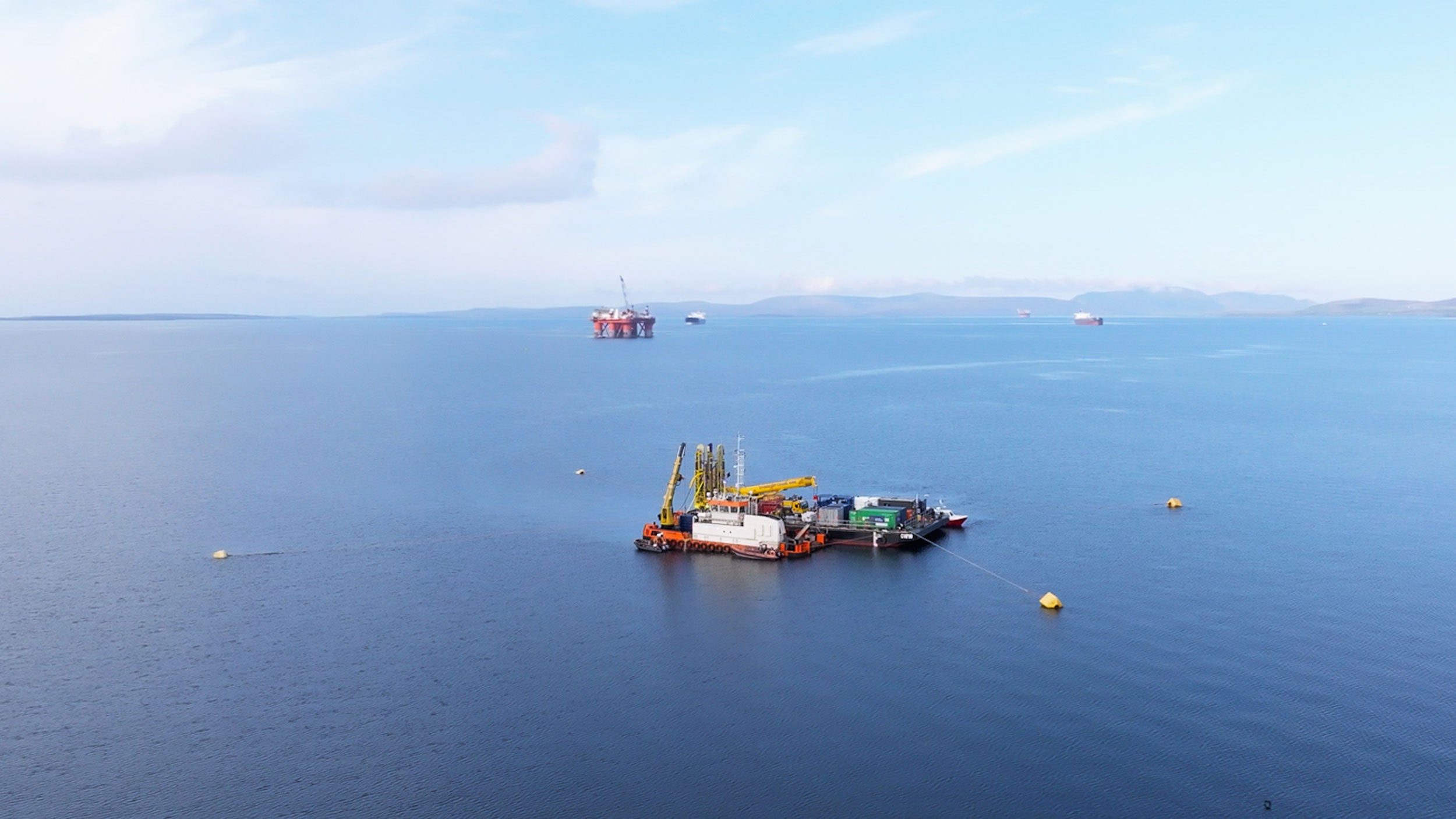
Subsea Micropiles reached a major industry milestone with the successful installation of the first commercial drilled-and-grouted micropile anchor for Orkney Harbour Authority at Scapa Flow in Scotland. This groundbreaking achievement—with nearly €12 million devoted to R&D—marked a pivotal advancement in the adaptation of land-based micropiling technology for offshore environments.
The solution combined the Subsea Micropiles robotic seabed drilling system with the Halliburton digitally engineered PileCem™ grout to deliver a next-generation anchoring method tailored for both fixed and floating offshore wind foundations. This integrated system offered several key benefits:
The digitally tailored grout system drastically reduced the time, cost, and risk typically associated with offshore anchor development. Halliburton’s use of digital twin modeling allowed predictive performance optimization to eliminate trial-and-error design cycles. Laboratory and yard testing further validated that the grout could resist mechanical degradation throughout the operational lifespan of the pile structure.
This successful collaboration between Subsea Micropiles and Halliburton established a new benchmark in offshore anchoring. The combination of robotic drilling automation with intelligent material design demonstrated how innovation can deliver faster, safer, and more sustainable offshore infrastructure, which positions the technology as a scalable and disruptive solution for the future of offshore wind.
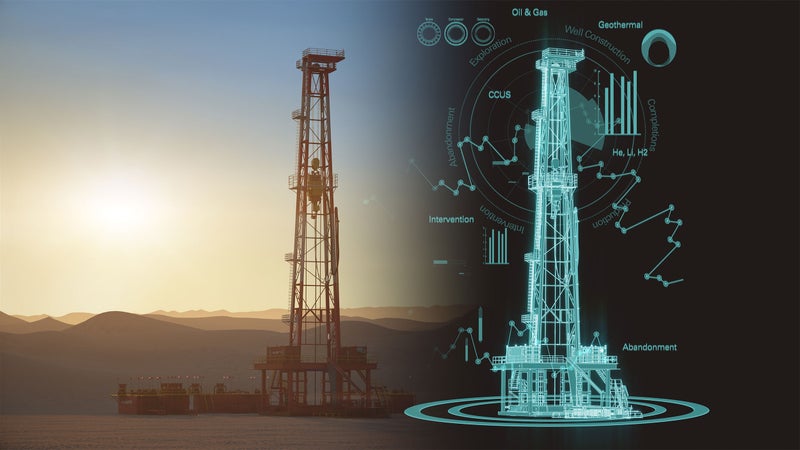
Advanced FEA analyzes the casing, cement sheath, and formation information to determine the cement mechanical properties necessary for long-term integrity.