Microblock™ cement additive provides compressive strength for jacket installation
Download PDFOffshore, jackup rig
Slurry tailored to achieve sufficient compressive strength

Southeast Asia

Lightweight jacket installations using rig-installed platforms rely on tailored slurry mixes for sufficient compressive strength. However, achieving uniform curing and sample strength is often a challenge, especially offshore.
An operator in Brunei planned to use a rig-installed platform to develop marginal fields in shallow water. The operation required a grout solution to achieve a compressive strength of 50 MPa in 28 days, as validated by cured samples and tested in accordance with ASTM C 109-90. Limited supply vessels and fast-paced operations required meticulous bulk and chemical logistics planning. The slurry design demanded precise formulation and tight control of curing conditions to achieve rapid strength at low surface temperatures.
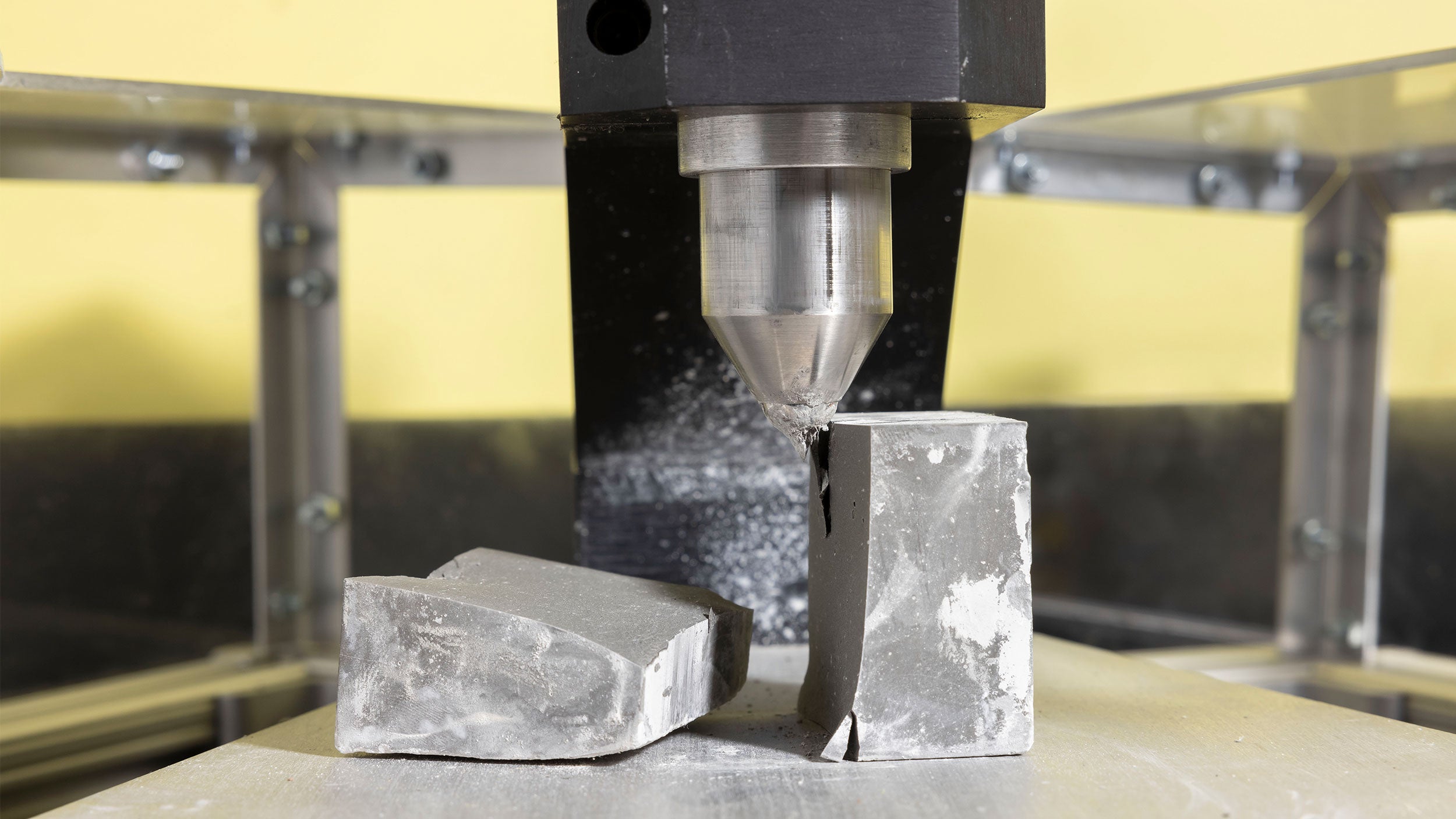
Halliburton designed a 17-lbm/gal slurry with Microblock™ cement additive, a liquid cement additive made from finely divided, high-surface-area silica, in combination with a compressive-strength enhancer for a low-temperature slurry. A full crew, which included laboratory technicians and operators, collected, cured, and crushed multiple samples at set intervals. A press machine was mobilized from outside the country to perform the 12- and 24-hour crush tests.
The slurry was mixed on the fly. Halliburton performed the grouting in two stages because the wiper seals at each jacket leg could not support a 77-m grout column. During the first stage, a 2.3-m-high plug was created to seal and support the column to the top of the jacket. Each leg had two inlets. The lower inlet (above the wiper seal) injected the plug, while the upper inlet was flushed with low-pressure seawater for approximately 12 hours to clear the annulus. Displaced water exited through an overflow port 1.8 m above sea level. Overflow was continuously monitored. Any stoppage signaled a lost plug that would require immediate remediation.
Hour average achieved 21.2 MPa
Hour achieved 29 MPa
Day average achieved 52.5 MPa
Downtime
The grout met and exceeded strength requirements at 12, 24, and 28 days. The 12-hour average achieved 21.2 MPa (required 5 MPa), the 24-hour average achieved 29 MPa (required 20.6 MPa), and the 28-day average achieved 52.5 MPa (required 50 MPa).
The first-stage plug was set within the planned time, which allowed the second stage to proceed without downtime. Due to slurry losses, the team repeated two first-stage plugs and one second-stage grouting operation. The operation was successful, the jacket was installed as planned, and the three-well development campaign was drilled and completed.