Find answers to frequently asked questions about Halliburton’s cementing software that improves well integrity, loss mitigation, and job efficiency
Halliburton’s cementing software helps us design, evaluate, and optimize cementing operations for our customers with precision and confidence. Below are answers to common questions about how our software supports well integrity, loss mitigation, and operational efficiency.
The system analyzes equipment dimensions and particle properties to calculate the likelihood of bridging or packing. It ensures particles can pass through float collars, liner hangers, and plugs without causing obstructions—helping maintain flow assurance and prevent costly delays.
Our software evaluates fluid rheology, equipment restrictions, and wellbore geometry to calculate the highest concentration of LCMs that can be added without risking plugging or transport failure. This helps customers balance loss mitigation with operational safety.
By modeling fluid density, particle size, and settling rates, the software estimates how much material will accumulate over time. It identifies the point at which static suspendability fails, allowing customers to plan for contingencies and maintain wellbore stability.
The software simulates wellbore hydraulics and loss zone dynamics to recommend the most effective LCM type, concentration, and fluid properties. This helps seal fractures or permeable formations efficiently, reducing non-productive time and improving cement placement.
Filter cake modeling predicts how LCM-laden fluids form a barrier when lost into the formation. The software estimates how the cake builds up and reduces losses to a manageable level, supporting long-term well integrity and minimizing formation damage.
A machine learning model clusters similar jobs based on well conditions and evaluates design decisions. It assigns a Cement Dependability Index (CDI) score to current designs, helping customers apply global best practices and improve job reliability.
CDI is a metric that reflects the effectiveness of a cement job based on design decisions that mitigate operational risks and support wellbore integrity. It helps customers benchmark performance and make data-driven improvements.
Using finite element analysis, the software simulates thermo-mechanical stresses on the cement sheath during drilling, production, injection, stimulation, evacuation, and abandonment phases. It identifies failure risks and tailors cement properties to maintain integrity throughout the well’s life.
The software assesses multiple failure modes, including mechanical stress, thermal cycling, chemical degradation, and hydraulic pressure changes. This comprehensive evaluation helps us design cement systems that withstand complex downhole conditions.
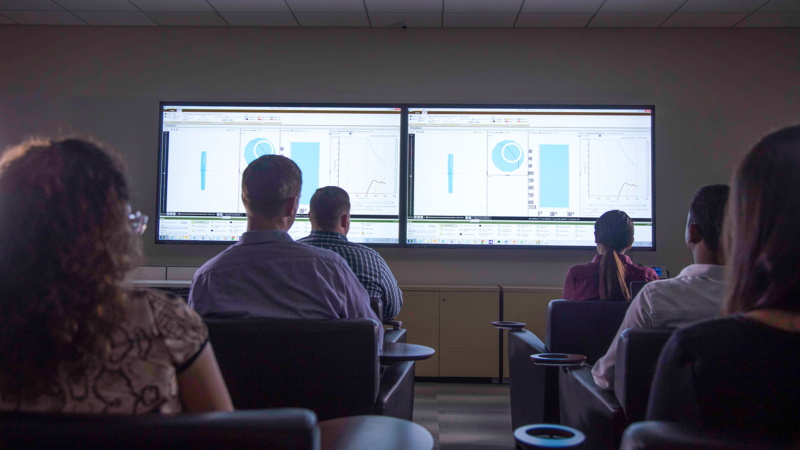
Cementing barrier design and tailoring digital twin software that enables real-time job monitoring, evaluation, and instantaneous barrier validation.
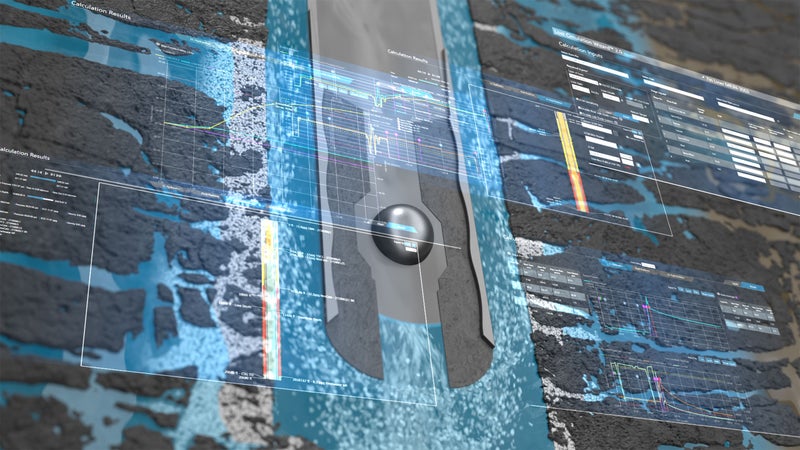
Lost Circulation Wizard™ software allows Halliburton technical professionals to predict the optimal LCM/fluid package to mitigate losses during and after cement operations.

Evaluating LCM selection and concentration for optimal passage, suspendability, and transport.

Tailored design decisions employed by machine learning to improve the probability of operational success.
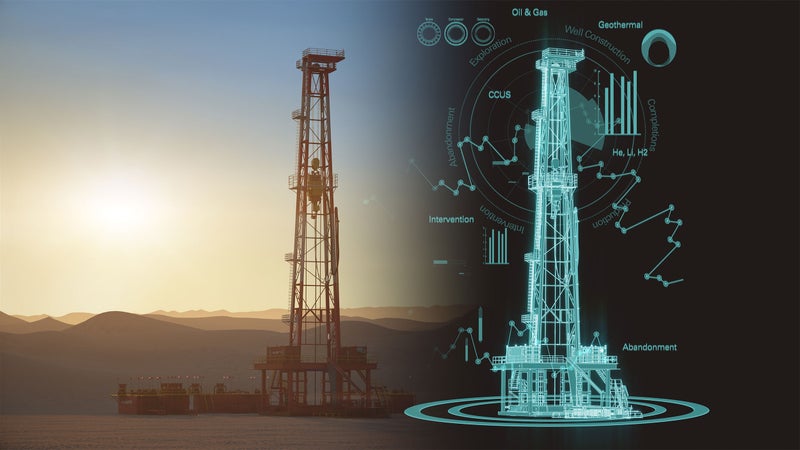
Advanced FEA analyzes the casing, cement sheath, and formation information to determine the cement mechanical properties necessary for long-term integrity.