Cement slurry tailored with Super CBL™ EXP additive helps combat gas flow potential and facilitate proper bonding
Download PDFMature Fields

Achieve planned TOC with no losses while lifting cement
Middle East

One of the main challenges with gas flow potential in oil well cement operations is gas migration. This occurs when gas from the formation enters the cement slurry before it sets. As the cement slurry transitions from a liquid to a solid, it can lose the capability to maintain hydrostatic pressure. This allows gas to percolate through the unset cement. If a gas channel forms, it can compromise well integrity.
A major operator in the Middle East risked effective isolation in an area prone to losses. A 4 1/2-in. off-bottom liner was deployed to a total depth of 8,400 ft and traversed a zone identified with flow potential. This posed a risk of formation fluid or gas migration into the cement slurry system during its transition from liquid to hard set behind the casing, which can jeopardize zonal isolation. Historical drilling data and offset information indicated a high likelihood of losses during cement placement, which can lead to lower top of cement (TOC) and exacerbate the risk of flow potential.
To address the loss challenge, Halliburton tailored a resilient slurry with a limited volume of 47 bbl across the open hole. First, Halliburton conducted extensive iCem® cementing service simulations to develop an effective pump schedule to manage equivalent circulating density (ECD) and facilitate optimal cement placement. To mitigate the potential formation losses, the rig pumped 200 bbl of low-yield-point mud. This was followed by 75 bbl of Tuned® Defense™ cement spacer combined with BridgeMaker™ LCM to combat losses. In addition, 24 bbl of lead cement were pumped, followed by 47 bbl of tail cement with Super CBL™ EXP additive, a gas-generating additive that can induce plastic state expansion to alleviate the risk of gas flow potential.
Microbond HT™ cement additive was also deployed to promote post-set expansion. Simulations were used to facilitate proper standoff with single-piece centralizers and to help determine the correct volume of BridgeMaker™ LCM for clearance through a competitor’s liner system. This minimized the risk of LCM packing off downhole tools. The most effective displacement rates to manage pressure were also identified.
bbl tail cement pumped with Super CBL™ EXP additive
Achieved
Confirmed full cement coverage
The operation was executed with cement slurries mixed in batches and pumped at 4 to 5 bbl/min. Despite minimal dynamic losses, spacer and lead cement returns were observed on the surface. A cement bond log (CBL) confirmed full cement coverage.

Cementing barrier design and tailoring digital twin software that enables real-time job monitoring, evaluation, and instantaneous barrier validation.
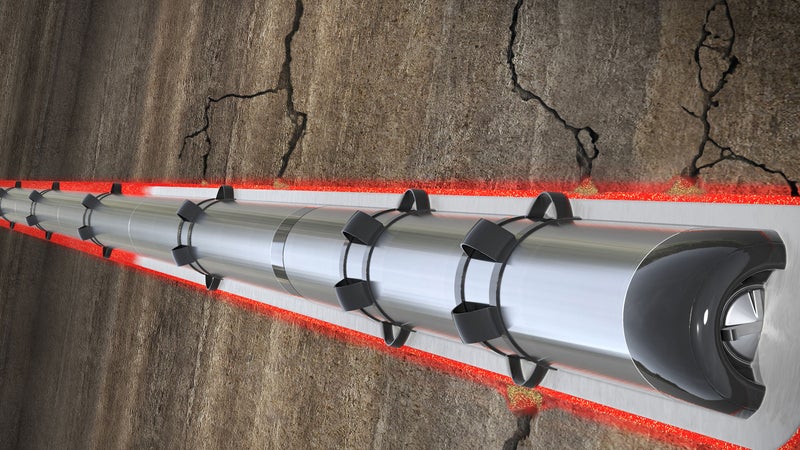
Tuned® Defense™ cement spacer systems prevent lost circulation while optimizing fluid rheology for effective mud displacement.

Improves cement spacer designs to prevent lost circulation.