SSR‑II™ cement plug system delivers reliable cement placement and reduces drill-out time
Download PDFMature Fields

Achieve TOC and reduce drill-out time

Colombia

An operator in the foothills region of Colombia planned to run and cement a long 9 5/8-in. drilling liner in a challenging re-entry well. The well profile included a restricted internal diameter near the wellhead, localized wellbore deformation, and high dogleg severity at the whipstock depth. Together, these conditions complicated liner placement and increased the risk of incomplete cement coverage over the interval.
To sustain well integrity and progress efficiently to the next phase of construction, the operator had to achieve dependable fluid separation during cementing and confirm top of cement (TOC) without relying on remedial operations. With limited ability to rotate the string and no opportunity to deploy centralizers, the success of the primary cement job depended on a mechanical cementing solution capable of maintaining separation through a long interval while supporting efficient drillout.
The re-entry well presented several challenges that reduced the operator’s margin for error during cementing. A restricted internal diameter near the wellhead and high dogleg severity limited liner handling and restricted rotational capability. The liner was set inside an 11 3/4-in. intermediate casing, and the geometry prevented the use of centralizers that would typically improve standoff and displacement efficiency.
The drilling liner section extended more than 6,000 ft, which increased the likelihood of fluid intermixing as cement traveled through the landing string and liner. Any loss of separation between fluids could compromise zonal isolation and require remedial cementing. In addition, as a drilling liner application, the operator sought to avoid additional well construction time associated with a dedicated drill-out trip through the shoe track. Minimizing bit wear during drillout was also a priority to support the efficient progression of drilling operations.
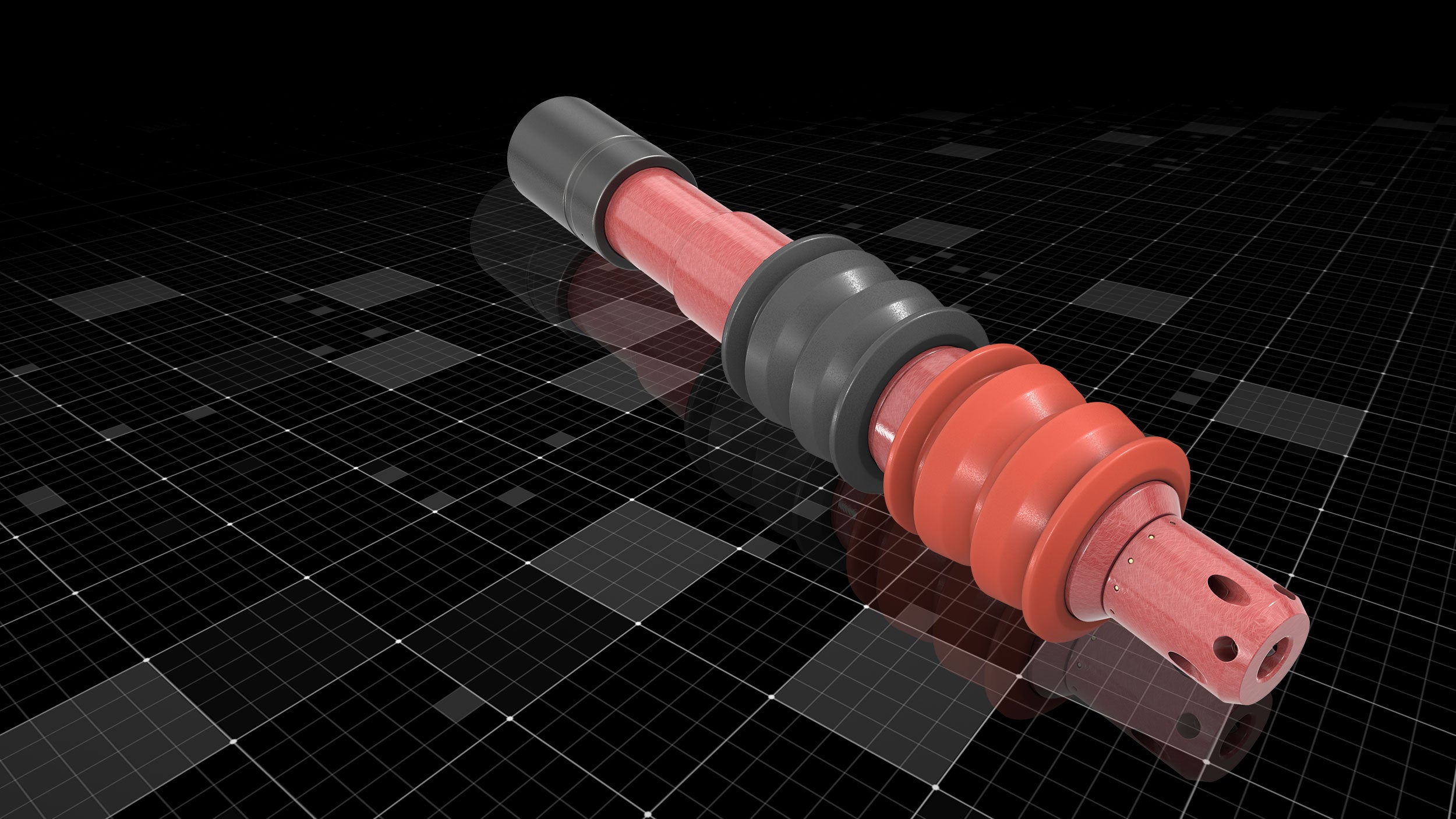
Halliburton recommended the 9 5/8-in. SSR-II™ cement plug system, a composite-base, dual-plug design engineered to deliver reliable mechanical separation in demanding liner cementing applications. The system incorporates high-efficiency HWE® bottom and top cementing plugs and dual MCXV darts designed to release reliably across a broad range of landing string configurations.
The composite construction minimizes metal content, which helps reduce bit dulling during drillout while maintaining structural integrity under high pump rates and operational stresses. The SSR-II cement plug system provided positive mechanical separation inside the landing string and liner, which reduced the potential for fluid intermixing as cement moved through the long interval. This capability was particularly important given the absence of centralizers and the limited ability to rotate the string.
The system also supported high-pressure testing after plug bump, which allowed the operator to verify plug integrity and cement barrier performance before proceeding with subsequent operations. Together, these features addressed the operator’s key risks related to cement placement reliability, operational efficiency, and drill-out performance.
ft drilling liner
Bit dulling
Dedicated drill-out trip required
Confirmed
The operator successfully deployed the SSRII cement plug system, and all surface pressure indications matched the expected performance. Acoustic and ultrasonic cement evaluation logs validated competent cement across the targeted formations. This result indicated effective fluid separation and placement in the complex well geometry.
During drillout, the operator used an 8 1/2-in. PDC bit to drill an additional 277 ft beyond the plugs and float equipment without damage to the bit. Dull grade inspection reported no dull characteristics after the bit was pulled out of hole, which confirmed the benefit of the composite plug design. As a result, the operator eliminated the need for a dedicated drill-out trip and avoided remedial cementing operations.
The operator achieved reliable cement placement on the first attempt, reduced operational time and cost, and maintained confidence in long-term liner integrity. The successful operation demonstrated how a composite, dual-plug cementing system can improve displacement efficiency and support dependable zonal isolation in challenging re-entry wells with restricted geometry and long cementing intervals.
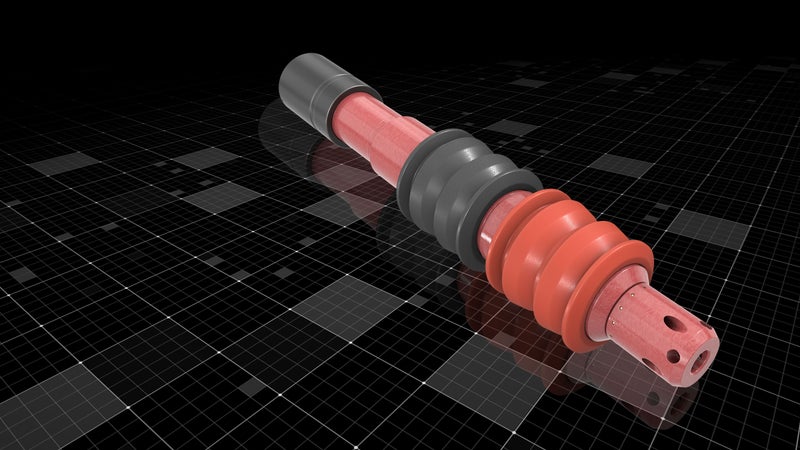
SSR-II™ cement plugs are designed to provide mechanical separation and prevent contamination between cementing fluids pumped down the landing string.