
Halliburton began operations in Canada in 1926, based in Turner Valley, Alberta. A century later, the region’s geology, operating conditions, and regulatory expectations shape how energy companies think about risk and execution.
The region has tested many of the industry’s most fundamental assumptions, from how resources are developed to how safely and consistently work must be executed. According to John Gorman, vice president, Canada, Halliburton, those tests define what customers expect when complexity rises. Longevity alone does not deliver value. Customers measure value through performance.
This perspective informs three leadership lessons that guide how operators deliver results in Canada today: disciplined risk, operational resilience, and reinvention.
Progress has never come from risk avoidance. It comes from teams that apply technical judgment to real operational problems. In the early 1990s, the industry often viewed shale oil and gas as source rock rather than a viable resource. Heavy oil and bitumen production relied primarily on extraction through mining. At the same time, the industry treated steam assisted gravity drainage (SAGD) as an early-stage concept rather than an established practice, with limited ability to precisely place and align well pairs. This precision placement proved essential to help achieve consistent thermal efficiency and economic performance on a commercial scale.
Advances in drilling accuracy, ranging capability, and well placement helped operators move from concept to repeatable SAGD development. These decisions required leaders to balance technical uncertainty against recovery potential rather than short-term execution convenience.
Over time, those decisions reshaped oil sands economics and changed how heavy oil could be produced. That discipline reduces uncertainty and builds confidence in well plans, execution, and long-term development strategies.
"At that stage, success depended on proving reliability before scaling,” Gorman says. “Execution mattered as much as innovation.”
Offshore operations, extended reach wells, and oil sands development all require technology and processes that perform under pressure. Resilience starts with execution discipline. Safety and service quality remain foundational, reinforced through close collaboration with customers on best practices and performance alignment.
Technology supports resilience when it improves repeatability. Drilling innovations improve complex paths with greater accuracy. Intelligent completions advance operational control in offshore environments. Together, these capabilities help operators plan and execute with confidence in the life of an asset.
“When you collaborate and engineer solutions for as long as we have in Canada, there is an incredible amount of trust built up that survives generations,” Gorman says. “That trust depends on the ability to deliver reliably as operating conditions and market cycles change.”
Modern Canadian operations reflect a shift toward remote execution, automation, and data-powered workflows. Early real-time operations centers evolved into daily remote operations supported by fiber-optic connectivity. The focus shifted from large-scale data generation to the use of smaller, relevant data sets. Cloud-based applications now support faster and more effective decision-making.
Automation now shapes how teams execute work in drilling and completions. Advances in drilling technology support difficult well designs and trajectories. Innovation in hydraulic fracturing addresses efficiency, emissions, and noise constraints in sensitive operating areas.
Gorman emphasizes that reinvention delivers value only when it improves quality and reduces exposure.
“Customers benefit when automation and remote operations support safer work environments.”
Canadian operations evolve through investment in technology, talent, and manufacturing capabilities that support both local execution and global application of technology.
What remains constant is the expectation placed on teams that operate in the region. Customers expect safe operations, reliable delivery, and solutions that improve decisions when complexity rises. Those expectations shaped the last century and will define success in the next.
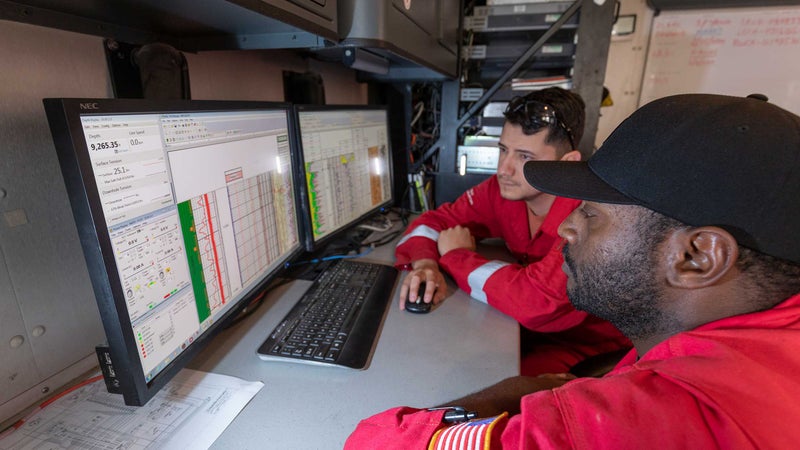
Maximize subsurface characterization, exploration, and development with Halliburton’s intelligent data modeling software and instant insights.
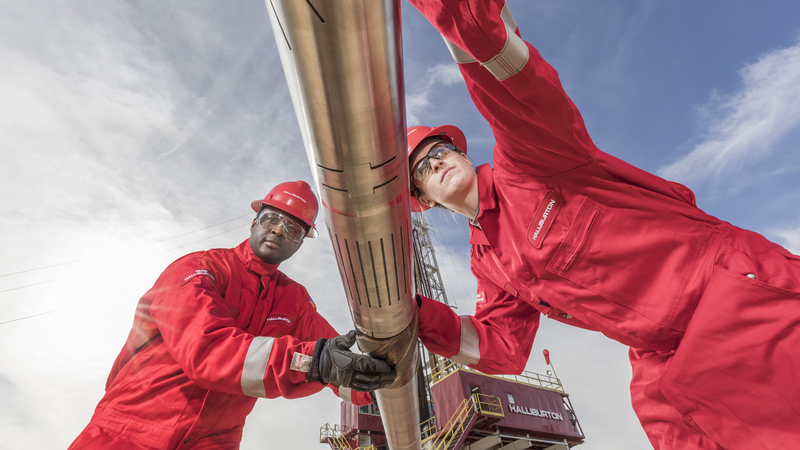
Design your well construction project with Halliburton's innovative software and drilling operations to help optimize your drilling fluids and cementing performance.
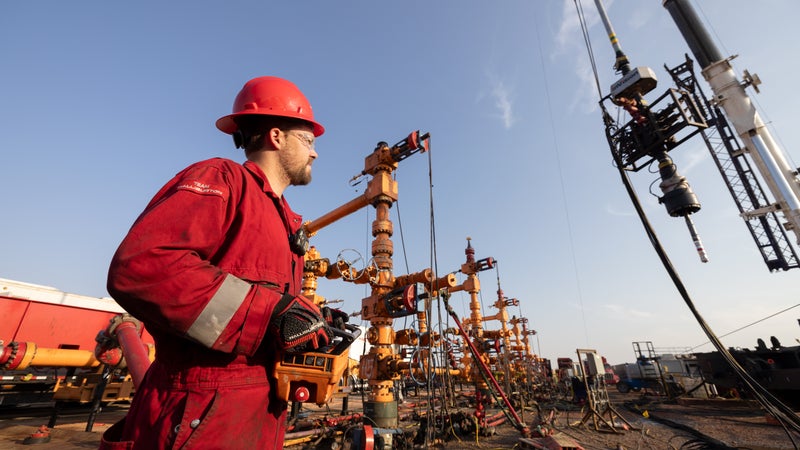
Our intelligent well completions enhance reservoir management and efficiency through electric solutions, data insights, automation, and remote connectivity
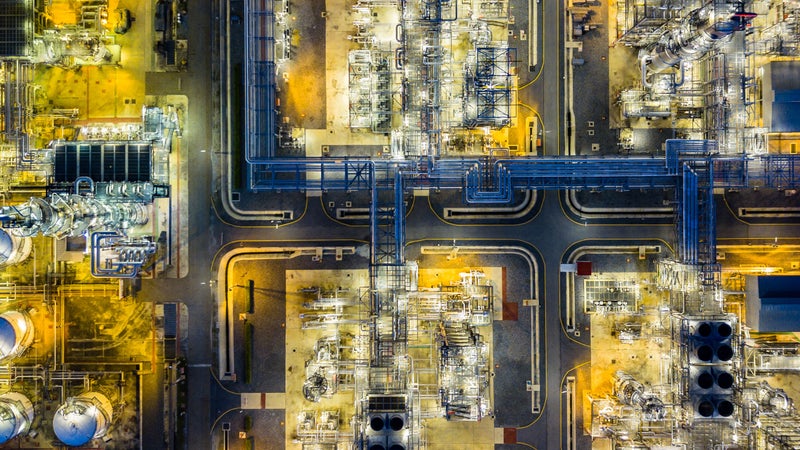
Halliburton optimizes production and performance with leading software and industry-leading technologies to help reduce costs and boost productivity
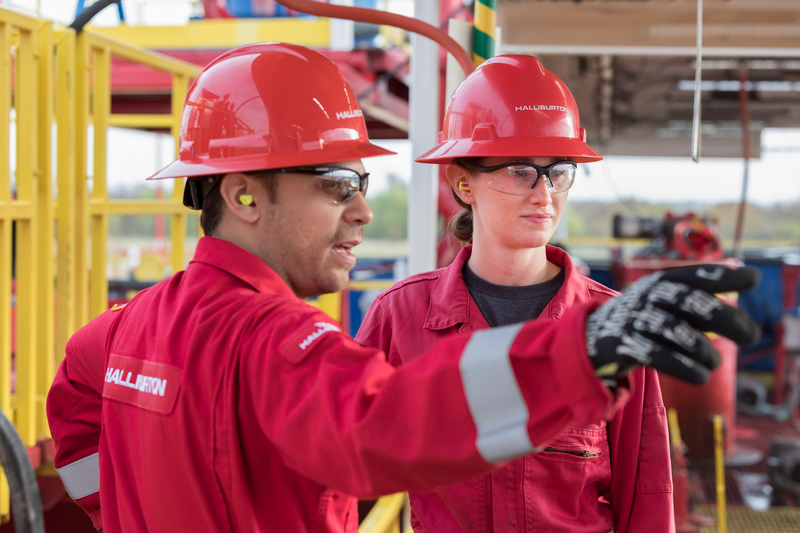
Abandonment solutions with the global experience and technologies to help diagnose, design and deliver abandonments for land, platform and subsea wells

Halliburton Landmark, provides E&P professionals with software-driven lifecycle insights that generate new ideas, actions, and results to maximize asset value